There is a moment every baker knows. You pull your cake out of the oven, the kitchen smells like something magical just happened, and then you cut into it. Dry. Dense. Not what you imagined at all.
You followed the recipe. You set the timer. You did everything right, or so you thought. And yet the cake disappoints.
That moment does not mean you are a bad baker. It means you are at the beginning of understanding something deeper than a recipe. It means you are ready to learn what baking actually asks of you. Here at Cake Classes In Chennai, we have seen this moment hundreds of times. And every single time, it becomes a turning point.
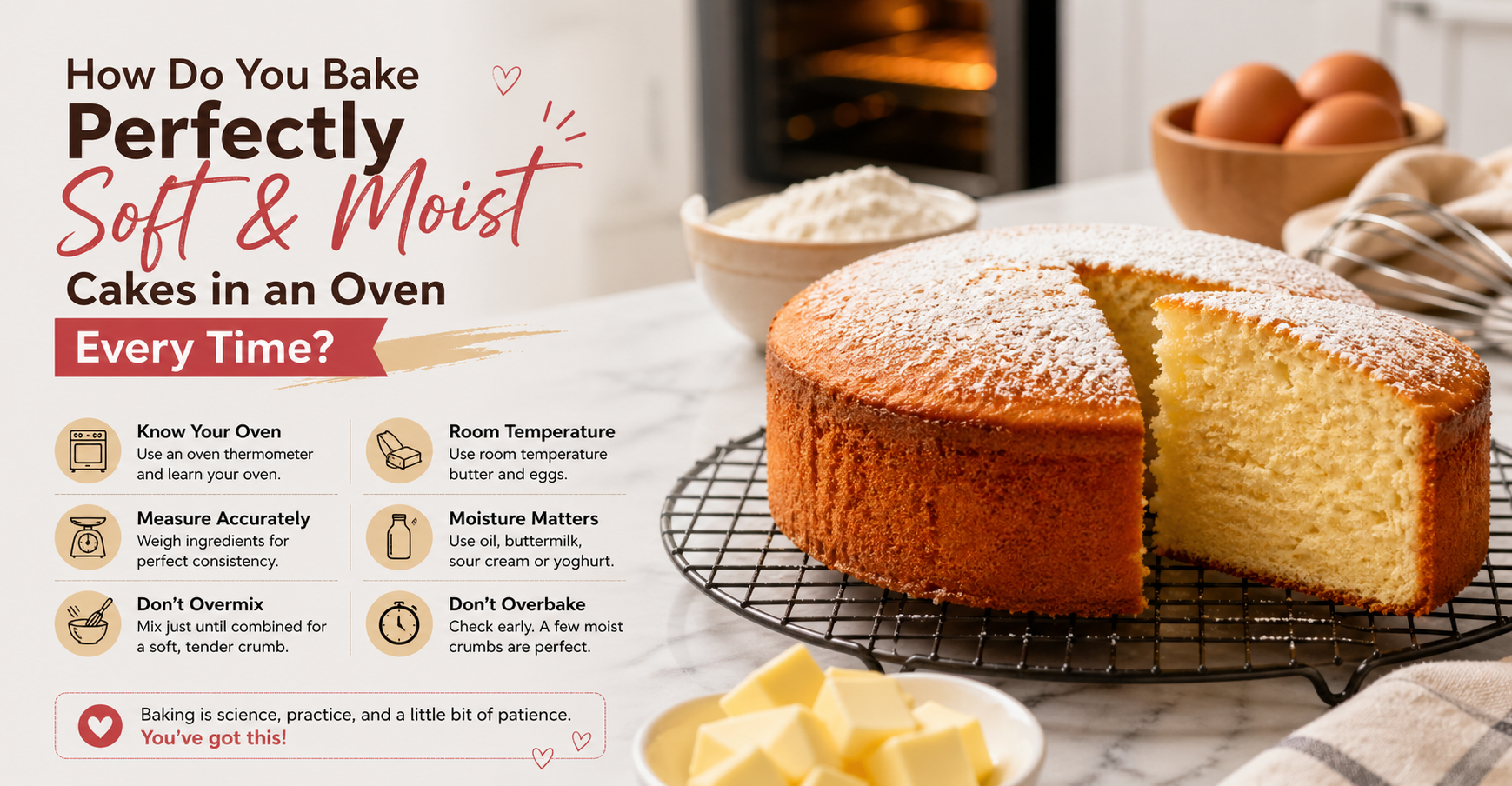
Your Oven Is Not Neutral
Most home bakers assume their oven bakes at the temperature shown on the dial. It rarely does.
Ovens run hot. Ovens run cold. Some have hot spots in the back, some near the top. This single truth changes everything. A cake baking at 190°C in your oven might actually be baking at 175°C or 210°C and both produce very different results.
Invest in a simple oven thermometer. It costs very little and transforms how you bake. Once you know your oven’s real temperature, you stop guessing and start understanding.
Room Temperature Is Not Just a Suggestion
When a recipe says “room temperature butter” or “room temperature eggs,” it is not being fussy. It is telling you something important about how ingredients behave.
Cold butter does not cream properly. Cold eggs can cause your batter to curdle. Both lead to uneven texture, and uneven texture leads to dry cake.
Pull your butter and eggs out at least an hour before you bake. Let them settle into the room. When ingredients are at the same temperature, they come together smoothly. The batter becomes cohesive, and a cohesive batter holds moisture all the way through baking.
Do Not Measure Weigh.
This is one of those shifts that quietly evolves your baking from inconsistent to reliable.
A cup of flour can weigh anywhere from 120g to 180g depending on how it is scooped. That gap matters enormously in a cake. Too much flour and the crumb becomes tight and dry. Too little and the cake will not hold. Weighing your ingredients removes this uncertainty entirely. Every time you bake the same recipe with the same weights, you get the same result. Consistency builds from precision, and precision builds confidence.
Overmixing Is a Silent Problem
The batter looks smooth. It looks right. But you have been mixing a little too long, and the gluten has tightened. The cake will bake up dense and chewy rather than soft and tender.
Once you add flour to a batter, mix gently and only until just combined. Stop when you no longer see dry streaks. A few small lumps are perfectly fine. They will bake out.This is one of those counterintuitive truths that shapes every good baker’s instinct over time.
Fat Is Your Friend
Oil-based cakes stay moister longer than butter-based ones. This is not an opinion, it is chemistry. Butter is partly water, and water evaporates during baking. Oil does not.
This does not mean butter has no place. Butter brings flavour and structure. But if your goal is maximum moisture, swapping some or all of the butter for oil makes a real difference. Sour cream, buttermilk, and yoghurt do the same thing. Their acidity tenderises the crumb, and their fat content retains moisture. If a recipe calls for plain milk, consider using buttermilk instead. You will notice the difference immediately.
Do Not Overbake. Even By Two Minutes.
This is the most common reason cakes turn out dry. Most recipes give a time range. Start checking at the earliest point. Insert a skewer into the centre, if it comes out with a few moist crumbs (not wet batter), the cake is done. Pull it out then, not five minutes later.
A cake continues cooking from residual heat even after you take it out of the oven. Trusting that process takes practice, but once you understand it, you will never overbake again.
What Changes Everything Is Guided Learning
Reading about technique helps. Practising on your own teaches you something. But baking alongside someone who can see what you are doing and tell you exactly where the process is going differently that builds real skill, fast.
This is why so many of our students tell us their baking transformed completely after just a few sessions. Not because they learned new recipes, but because they finally understood why. If you are serious about this craft, our Diploma in Bakery and Patisserie Arts is where that understanding becomes deep, professional and lasting.
The Cake You Imagined Is Possible
That moment of cutting into a dry cake, it does not have to keep happening.
With the right knowledge, the right habits, and honest attention to what baking actually requires, every cake you bake can be the soft, moist, beautiful thing you pictured when you first started mixing.
Come learn with us. Our cake baking classes in Anna Nagar are open for all levels, all schedules, and all the questions you have been afraid to ask.
The oven is waiting. So is the baker you are becoming.
