There is a particular kind of heartbreak that bakers know well. You spend hours on a cake, the layers, the frosting, the little details that make it feel like something. You step back, satisfied. And then, two days later, you open the box to find it dry, weeping condensation, or smelling faintly of whatever else was in your refrigerator. It’s not dramatic. It’s just quietly disappointing.
We have seen this moment on the faces of our students at our baking courses in Chennai more times than we can count. The baking itself was perfect. The storing? That’s where things quietly fell apart.
This is the part nobody talks about enough. Recipes get shared endlessly. Techniques get taught carefully. But the hours after baking, the preservation of all that effort, often gets a single line of advice: refrigerate if not consumed immediately. That is not enough. You deserve better guidance than that.
So let’s slow down and talk about it properly.
What is the Proper Way to Store Cakes?
The first thing to understand is that not all cakes want the same environment. A simple sponge and a cream-frosted celebration cake have entirely different needs, and treating them the same way is where most people go wrong.
An unfrosted cake plain layers, no filling is remarkably forgiving. Wrap it tightly in cling film while it is still slightly warm (not hot), and it will hold beautifully at room temperature for two to three days. The wrapping traps just enough moisture to keep the crumb tender without creating sogginess.
Once frosting enters the picture, everything evolves. Buttercream-covered cakes are generally stable at room temperature for up to two days, as long as your kitchen is not too warm. In Chennai’s climate, this window shortens. Anything beyond 28°C and you are better off refrigerating but here is the critical part: always bring the cake back to room temperature before serving. Cold buttercream is dense and dull. Room-temperature buttercream is silk.
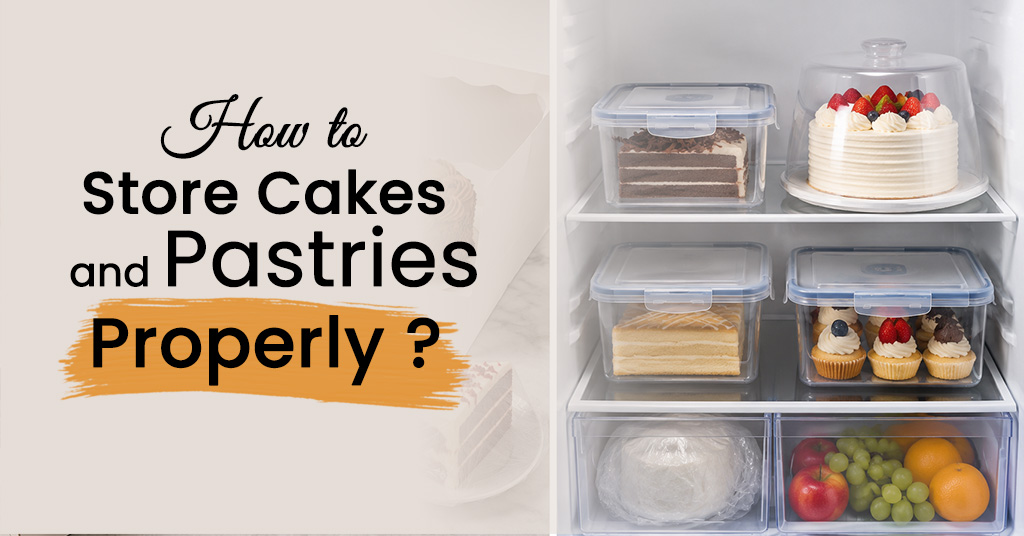
Cakes with fresh cream, custard fillings, or fruit compotes need the refrigerator without negotiation. These are perishable. But store them in a proper airtight cake box, not loosely covered. Exposed cake in a refrigerator absorbs odours and dries faster than you would expect.
One more thing worth knowing: fondant-covered cakes should never go into the refrigerator. The moisture condenses on the fondant surface the moment it comes out, causing it to sweat, lose colour, and sometimes collapse. Store fondant cakes at cool room temperature, away from direct light.
Should Pastries Be Left Out or Refrigerated?
This question causes more confusion than almost any other in baking. And honestly, the honest answer is: it depends on what the pastry is made of.
Pastries that are purely fat, flour, and sugar think shortbread, biscotti, dry cookies, or plain croissants are perfectly comfortable at room temperature. In fact, refrigerating them makes them go stale faster because cold air strips moisture from starches rapidly. Store them in an airtight tin or container, and they will stay fresh for four to five days.
The moment dairy or eggs become a significant component of the filling cream puffs, éclairs, tarts with pastry cream, mille-feuille refrigeration is non-negotiable. These fillings are delicate and spoil quietly. A cream puff left out for six hours in a warm kitchen is a risk. Just refrigerate it.
Here is where people often make a well-meaning mistake: they refrigerate everything out of caution. But croissants stored in the cold lose their beautiful flakiness. Choux pastry softens and collapses. Puff pastry-based items lose their crispness almost immediately upon refrigerating.
The better approach is to think about what is inside the pastry, not just the pastry shell itself. If the filling is cream-based, chill it. If the pastry is dry and the filling is sugar or jam, leave it out. When in doubt, eat it sooner. Pastries are not designed for long preservation, they are designed for joy, and joy does not improve with excessive waiting.
The Language of Labels and Time
This is a habit we encourage every student to build: label everything. Date your stored cakes. Note what frosting is on them. It takes ten seconds and saves genuine uncertainty later. A good baker treats their storage shelf with the same intention they bring to their mixing bowl.
Temperature Is a Relationship, Not a Rule
Understanding temperature in baking is not about following a fixed chart. It is about understanding how ingredients behave. Fat-based frostings want cool air but not cold shock. Fruit fillings want containment. Delicate layers want protection from airflow.
When this understanding shapes how you store, it builds confidence. You stop guessing and start knowing. That shift from uncertain to grounded is exactly what proper knowledge does for a baker.
Why Storage Is Part of the Craft
At baking class in chennai, we have always believed that baking does not end when the oven timer goes off. It continues through every decision you make after that. How you cool a cake. How you wrap it. How you serve it. These are not afterthoughts, they are part of the craft.
Our Cake Mastery Course covers exactly this kind of knowledge not just how to bake beautifully, but how to think like a baker. Storage, texture science, presentation, it all lives in the same conversation.
When to Trust Your Senses
No guide will replace your own judgment. If a cream filling smells even slightly off, trust that instinct. If a cake has been in the refrigerator for five days, do not serve it to someone you care about simply because a rule says it is technically within range. Your senses are instruments. Use them.
Coming Back to That First Moment
Remember that quiet disappointment we opened with? The dried-out cake, the weeping frosting? That rarely happens because someone baked poorly. It happens because the care that went into baking did not extend into storing.
You put thought into your flour. Into your butter temperature. Into your piping.
Put the same thought into the box you choose, the wrap you use, the temperature you store at.
If you want to go deeper to understand the why behind every technique, not just the what, our baking classes in Anna Nagar are designed for exactly that kind of curious, committed baker.
Because every great cake deserves to be tasted exactly as it was meant to be.
