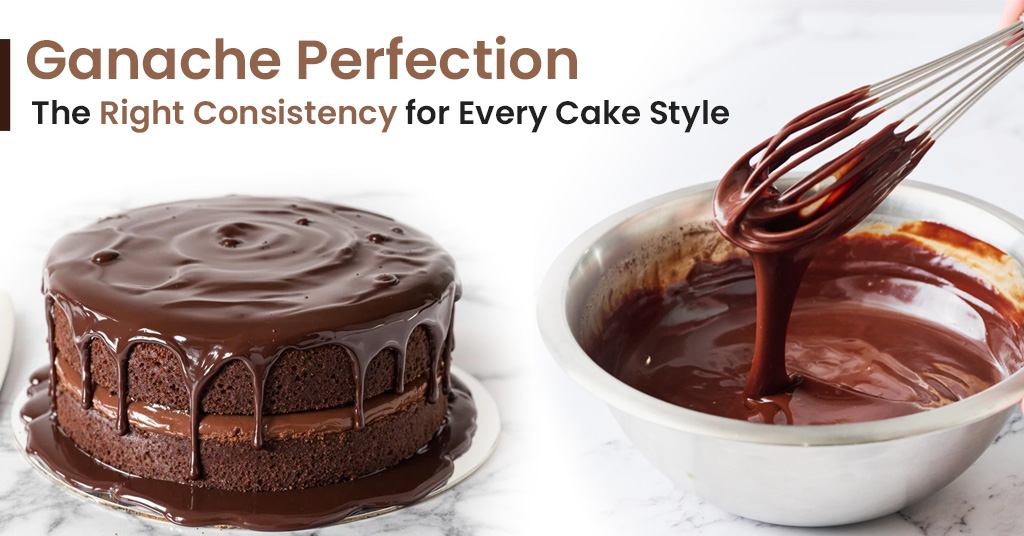
There’s a moment every baker knows. You’ve spent hours on a cake, the layers are even, the sponge is perfect, the flavour is exactly right. Then you pour the ganache, and something feels off. It’s too thin and runs straight off the sides. Or it’s too thick and drags across the surface, pulling at the crumb. You stand there wondering what went wrong, and whether it’s something you can fix, or whether you have to start over.
That moment used to discourage a lot of our students here at Baking Class in Chennai. We offer Professional Bakery Courses In Chennai that cover exactly these kinds of real-kitchen challenges, and ganache confusion comes up more than almost anything else. Not because it’s impossibly difficult. But because nobody ever explains the why behind the ratios.
Ganache isn’t one thing. It’s a family of preparations, and each one behaves differently depending on what you ask it to do.
Once you understand that, everything changes.
What is the Consistency of Ganache?
This is the right place to start, because most people treat ganache like a single recipe. It isn’t. Consistency is the entire point, and it shapes every decision you make.
A pourable ganache, the kind you use for mirror glazes or dramatic drip cakes is thin, fluid, and sets with a gentle sheen. It typically uses a 1:2 ratio of chocolate to cream. More cream means more movement, more gloss, and a finish that flows rather than holds.
A spreading ganache, ideal for coating cakes or filling between layers, sits at roughly 1:1. It’s thicker at room temperature, firm enough to control, but soft enough to work with a palette knife.
Truffle ganache is the firmest of all, often sitting at a 2:1 ratio of chocolate to cream. This is the ganache that holds its shape, gets rolled into balls, and resists warmth long enough to actually be handled.
Temperature plays as much a role as ratio. The same ganache that pours beautifully at 35°C will become a spreadable consistency at 25°C, and a firm, scoopable mass at 18°C. This isn’t a flaw. It’s the nature of the ingredient, and once you work with it instead of against it, the whole process evolves.
What is the Secret to Good Ganache?
Honestly? The secret is patience with heat.
Most ganache problems begin with rushing. You overheat the cream, the chocolate seizes or turns grainy, and you end up with something that looks broken before you’ve even started. The goal is gentle, controlled warmth, not boiling cream poured recklessly over chopped chocolate.
Use quality chocolate. This matters more than most bakers admit. The cocoa butter percentage in your chocolate directly affects how ganache sets and behaves. A good couverture chocolate with a high cocoa butter content gives you a smoother emulsification and a glossier finish.
Chop the chocolate finely and evenly. Large uneven chunks create hot and cold spots, which leads to inconsistent melting and a grainy texture.
Let the hot cream sit on the chocolate for a full minute before stirring. This is the step people skip when they’re impatient. That resting minute allows the heat to distribute evenly. Then stir slowly from the centre outward, using a spatula, not a whisk, you want to bring the emulsion together without introducing air.
A smooth ganache is an emulsion. The fat in the cream and the fat in the chocolate have come together. When you respect that process, the result is silky, glossy, and deeply satisfying.
Matching Ganache Consistency to Cake Style
A naked cake calls for restraint. Here, a slightly thicker ganache applied in thin, deliberate strokes builds texture without overwhelming the exposed layers beneath. You’re not hiding the cake, you’re framing it.
A tiered wedding cake needs structure. The ganache has to hold under its own weight and the weight of whatever decorations go on top. A firmer ratio, applied in two thin coats and allowed to fully set between each, builds a surface that’s reliable enough to decorate with confidence.
Drip cakes are about timing and temperature more than anything else. You need to test a small amount of ganache on the side of a chilled cake before committing to the whole thing. If it runs too fast and pools at the base, let it cool a few more degrees. If it sets too quickly and looks patchy, warm it gently. This is a relationship between temperature and cake, and it asks for your attention.
Chocolate mousse cakes, entremets, and glazed tarts often need a mirror finish and that consistency is almost entirely about temperature control at the point of pouring.
What Are Common Ganache Mistakes to Avoid?
Let’s be honest about this, because we’ve seen them all.
The most common mistake is overheating the cream. Once it boils aggressively and hits the chocolate with too much force, the emulsion can split and leave you with an oily, grainy mess. Warm to a gentle simmer is enough.
The second mistake is using cold cream on cold chocolate. The contrast in temperature makes it nearly impossible to emulsify properly. Both ingredients should be at working temperature before you bring them together.
Adding butter too early is another one. Butter is sometimes added to ganache for extra sheen and softness, but if the mixture is still too hot when you add it, the butter simply melts into the emulsion and disappears rather than enriching it. Add it once the ganache has cooled to around 35°C.
And then there’s impatience with resting time. Ganache that’s rushed into use before it reaches the right temperature will never behave the way you want it to. It needs time to stabilise. That’s not wasted time. That’s the process working as it should.
Why Chocolate Type Changes Everything
Dark, milk, and white chocolate are not interchangeable in ganache. Each has a different cocoa butter percentage and sugar content, which means each builds a different texture at the same cream ratio.
White chocolate ganache needs significantly less cream than dark to achieve the same spreadable consistency. Dark chocolate can handle a higher ratio of cream and still hold its structure. Milk chocolate falls somewhere in between, but its higher sugar content means it can taste sweeter than you expect once the ganache is finished.
If you’ve ever followed a dark chocolate ganache recipe using white chocolate and wondered why it turned into soup, this is why. The ratios must shift to match the chocolate you’re using.
Building Intuition Over Time
Ganache knowledge isn’t a checklist. It builds through repetition and honest observation. You make a batch, you notice how it pours, you adjust. You chill it for an hour, you come back and see how it has set, and you adjust again. Over time your hands start to recognise the right consistency without you having to measure it.
That intuition is what separates a baker who follows a recipe from one who truly understands a technique.
At Baking Class in Chennai, this kind of depth is what we aim to teach. If you want to build real technical knowledge in cake work, our Diploma in Bakery and Patisserie Arts covers ganache, glazes, and every other foundational skill in a structured, hands-on environment designed for serious learners.
You came to baking because something about it moved you. The finish on a perfectly glazed cake, the quiet satisfaction of something coming out exactly right. Ganache, when you truly understand it, stops being a source of anxiety and becomes one of your most reliable tools.
For those ready to move beyond guesswork, our cake baking classes in Anna Nagar are a place where that understanding is built carefully, patiently, and with your hands in the process from day one.
That first time you pour a ganache and it falls exactly the way you intended, you’ll remember it.
