There’s a moment every baker knows.
You pull a cake out of the oven and it smells perfect. The texture is right. The flavour, when you sneak a small piece from the edge, is exactly what you hoped for. But when you look at it sitting on the counter plain, unfinished, waiting something feels incomplete.
That feeling isn’t just impatience. It’s instinct telling you that the cake isn’t done yet.
Baking and decorating are two sides of the same craft. You can be brilliant at one and completely lost with the other. And for a long time, many bakers believe that if their recipes are solid, presentation can come later. We’ve seen this pattern often here at our baking institute in Chennai. Students arrive confident in their baking and uncertain about their boards, bags, and spatulas and slowly, through practice, they discover how much the second half of the craft changes everything.
Decoration isn’t about making things look fancy. It’s about completing what you started.
Important Skills Every Baker Should Learn
Before we talk about decorating specifically, it’s worth pausing on what makes a baker complete in the first place.
Baking requires precision. Decorating requires presence.
The technical side like understanding ratios, controlling oven temperatures, knowing how fats and sugars behave that builds your foundation. But the skills that evolve you from a good baker into a trusted one are often the softer ones. Reading a client’s brief. Matching a theme. Knowing when a simple finish speaks louder than an elaborate one.
Decorating is where those softer skills live.
A baker who invests time in learning presentation becomes someone who can take a brief and deliver something that moves people. That’s not a small thing. That’s the difference between baking for consumption and baking for memory.
Essential Cake Decorating Skills for Beginners
If you’re just starting out, the world of cake decorating can feel overwhelming. There are so many techniques, tools, and trends that it’s easy to freeze and not know where to begin.
Start small. Start honest.
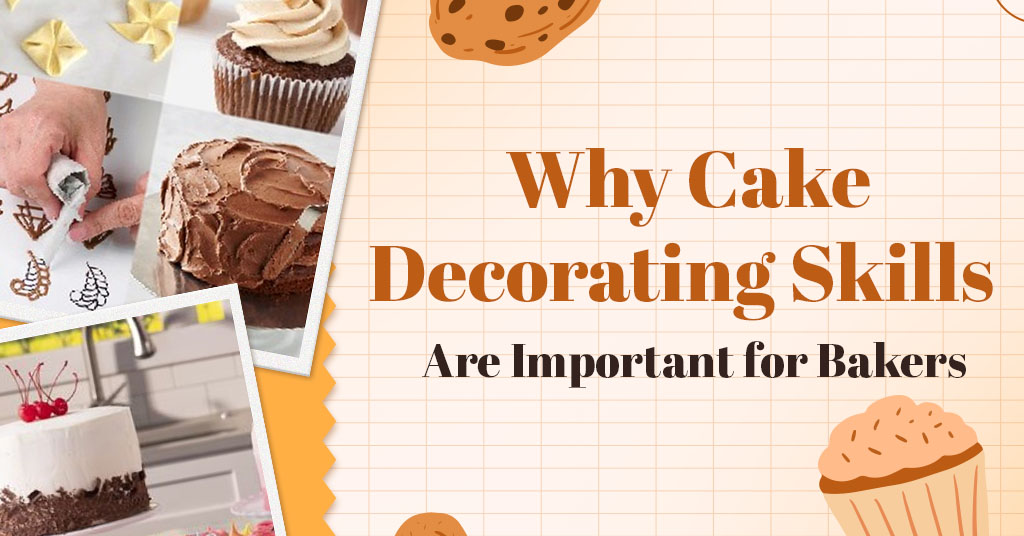
The most essential decorating skills for beginners are the ones that build confidence through repetition. Learning to crumb coat a cake properly. Understanding how to achieve a smooth finish with buttercream. Getting comfortable with a piping bag before attempting anything ornate.
These aren’t glamorous milestones. But they shape your hands and your eye in ways that nothing else can. Once you can crumb coat cleanly and pipe a steady line, everything else becomes an extension of that muscle memory. Decorating, at its core, is about control and control is built slowly, not rushed.
Different Cake Decorating Techniques for Beginners
Once the basics feel steady, the world opens up considerably.
There are several decorating approaches worth exploring early in your journey. Buttercream textures ruffles, rosettes, palette knife strokes give you freedom with colour and movement. Fondant work teaches patience and precision, shaping a cake into something architectural. Ganache drips have become enormously popular because they’re forgiving and visually striking once you understand temperature. Edible prints and wafer paper add a modern dimension for bakers comfortable with digital tools.
Each technique asks something different of you.
Fondant asks for patience. Buttercream asks for confidence. Ganache asks for timing. Mastering even two or three of these transforms what you’re able to offer and what clients can ask for. Our Diploma in Bakery and Patisserie Arts course covers many of these decorating methods alongside the full baking curriculum, giving you the structured path to learn each technique with proper guidance and hands-on practice.
Rules for Baking a Perfect Cake
Good decoration cannot save a poorly baked cake.
This is the honest truth that gets glossed over sometimes. The structure underneath the frosting matters just as much as what’s on top. A cake that sinks in the middle, has an uneven crumb, or tastes dry will disappoint regardless of how beautiful the exterior is.
So before decoration, the fundamentals must hold.
Room temperature ingredients make a real difference. Overmixing after adding flour develops gluten and toughens the crumb. Opening the oven too early collapses structure. Using a toothpick or skewer before pulling the cake out isn’t optional, it’s essential. These aren’t suggestions. They’re the rules that protect everything you’re about to build on top.
Decorating a well-baked cake feels effortless in comparison. Decorating a flawed one is a constant battle.
Basic Baking Tips for Perfect Cakes Every Time
Consistency is the real goal.
Not the perfect cake once. The reliable cake every time.
That reliability comes from habits. Weighing ingredients instead of eyeballing them. Prepare your tin before your batter is ready. Read a recipe from start to finish before you begin, not halfway through when you realise you needed something chilled overnight. Use an oven thermometer instead of trusting the dial, because most home ovens run hot or cool by ten to twenty degrees.
These small disciplines build a practice. And a practice builds trust in yourself first, then in those who eat what you make.
Why It All Comes Together
Return to that moment at the beginning. The cake on the counter, perfectly baked, waiting.
Decoration is the invitation. It says: this was made for you. It communicates care, intention, and skill in a language that goes beyond taste. A beautifully finished cake tells someone that you thought about them before they even took a bite.
That is what cake decorating gives a baker not just technique, but the ability to complete the story. If you’re ready to build both sides of your craft, baking classes Anna Nagar offers structured, hands-on training that takes you from your first piping bag to professional-level finishing. Because every baker deserves to feel the satisfaction of a cake that is truly finished inside and out.
